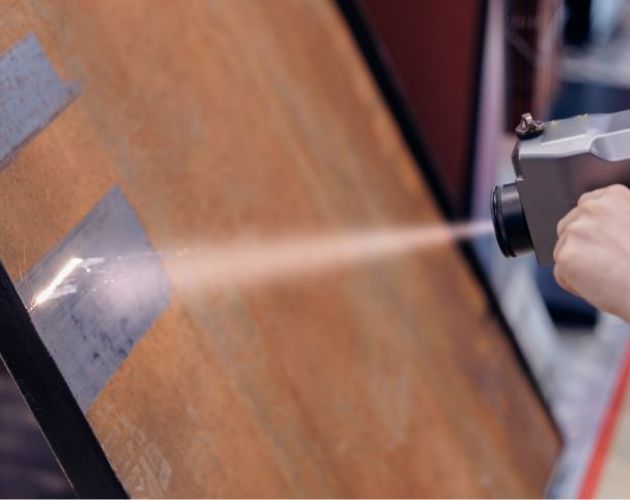
Laser cleaning may sound futuristic, but the principle is surprisingly straightforward. A controlled laser beam is directed at a surface, where it removes unwanted material such as rust, paint, soot, grease, oxidation or old coatings.
The main advantage is control.
Traditional cleaning often depends on chemicals, scraping, sanding or abrasive blasting. These methods can work, yet they may also create dust, wear away the base material or damage delicate details. Laser cleaning targets the contamination rather than attacking the entire surface.
So, what can be cleaned using laser technology? The list is broader than many people expect, although every material needs the correct settings and a proper test area before work begins.
Metal Surfaces
Metal is one of the most suitable materials for laser cleaning. The process can remove corrosion, paint, oil, oxide layers and manufacturing residue without the constant physical contact involved in grinding or wire brushing.
Commonly treated metals include:
- Mild steel
- Stainless steel
- Aluminium
- Cast iron
- Copper
- Brass
- Titanium
- Galvanised steel
A thick steel beam covered in heavy corrosion needs a very different setup from a thin aluminium panel. Power, pulse rate, beam movement and working speed must be matched to the material being cleaned.
Rusted Steel
Rust removal is one of the best-known uses of laser cleaning. The beam breaks down the corrosion layer and exposes cleaner steel beneath it.
This can be useful for machinery, gates, railings, structural steel, agricultural equipment, tools and vehicle components. The cleaned area may then be prepared for painting, welding or the application of a protective coating.
Because the process is non-contact, it can also reach awkward shapes and detailed metalwork without leaving the deep scratches associated with aggressive mechanical tools.
Laser cleaning can be especially helpful where only one section needs attention. Instead of blasting or grinding an entire component, the operator can focus on the affected area.
Stainless Steel
Stainless steel can develop heat tint, oxidation, staining and residue during fabrication. Laser cleaning may remove these marks while preserving the metal below.
It is often used around weld seams, production equipment, fabricated components and industrial machinery. Polished stainless steel needs extra care, as excessive energy could change the appearance of the finish.
The process can also prepare stainless steel before welding, coating or further fabrication.
Aluminium, Copper and Brass
Aluminium can be cleaned of oxidation, paint, adhesives, oil and light surface contamination. Automotive parts, machinery housings, moulds and fabricated panels are common examples.
Copper and brass can also be treated. Laser technology may remove tarnish and oxidation from electrical parts, decorative features, machinery components and heritage metalwork.
These materials can reflect more laser energy than darker metals, so careful adjustment is essential. A test area helps the operator find a setting that removes contamination without marking the surface.
Painted and Coated Surfaces
Laser cleaning may also strip paint, powder coating, varnish and other surface treatments.
The laser transfers energy into the coating, causing it to break down or lift away. With careful control, an operator may remove one layer without unnecessarily affecting the material underneath.
This makes the process useful for:
- Machinery being repainted
- Metal panels with old coatings
- Automotive parts
- Weld preparation
- Decorative metalwork
- Heritage restoration
- Localised paint removal
Not every coating behaves in the same way. Dark coatings often absorb laser energy more readily, while pale or reflective finishes may need slower passes or adjusted settings.
Thick paint and multiple coating layers may also require several passes. The goal is not simply to use more power. It is to remove the coating gradually while protecting the underlying material.
Natural Stone
Stone is another important application, particularly where the surface is valuable, carved or historically significant.
Laser technology may be used on:
- Limestone
- Sandstone
- Granite
- Marble
- Slate
- Memorial stone
- Decorative carvings
It can remove soot, pollution staining, surface deposits, some biological growth and selected coatings. Statues, church features, monuments, memorials and architectural details may all benefit from this controlled approach.
The advantage is precision.
Abrasive cleaning can soften lettering, flatten carved detail or remove the weathered outer face of the stone. Laser cleaning can be directed into smaller areas with far less physical wear.
Still, no two stone surfaces are identical. Porosity, colour, age, moisture levels and previous treatments can all change how the material responds. A discreet test patch should always come first.
Brick and Masonry
Brickwork often collects soot, smoke staining, old paint, carbon deposits and atmospheric grime. Laser technology may be suitable for selected brick and masonry surfaces, especially during restoration work.
It can be useful where preserving the original brick face is important.
Heavy blasting may remove the harder outer skin of some bricks, leaving the softer material underneath exposed to rain, frost and further deterioration. Once the brick face has been damaged, it cannot simply be put back.
Laser cleaning offers greater control, but the condition of the wall must still be assessed. Weak bricks, loose mortar, damp areas and previous repairs may all respond differently.
On some buildings, a combination of cleaning methods may be more sensible than using one process across the entire façade.
Concrete Surfaces
Concrete can be laser cleaned in certain industrial and construction settings. The process may remove paint, coatings, rubber marks, grease and surface residue from floors, walls or precast components.
It can also create a cleaner surface before bonding, repair or recoating.
Concrete is porous, though. Oil, chemicals or staining may have travelled below the visible surface. Removing the upper layer does not always remove contamination that has soaked deeper into the material.
This is why the condition of the concrete should be examined before deciding on the cleaning method.
Wood and Timber
Wood can be treated using laser technology, but it requires careful, conservative settings. Since timber is sensitive to heat, too much energy can darken, scorch or burn the surface.
Used correctly, laser cleaning may remove:
- Soot
- Smoke staining
- Thin paint
- Old varnish
- Surface dirt
- Light biological growth
It can be helpful on carved timber, beams, doors, furniture and heritage interiors.
Sanding detailed woodwork can blur edges, remove original tool marks and gradually change the shape of decorative features. Laser cleaning can work more selectively, particularly around carvings and intricate designs.
The type of timber also matters. Dense hardwood, old oak and soft pine will not react in exactly the same way. Previous oils, paints, stains and preservatives can change the response too.
A small test area is essential before treating a larger wooden surface.
Ceramics and Glass
Ceramic surfaces may be cleaned of soot, grime, deposits and certain old coatings. Tiles, decorative features, pottery and heritage pieces can sometimes be treated successfully.
Glass is more challenging.
Rapid heating may create stress, surface changes or cracking, so only suitable equipment and carefully selected settings should be used. The type and thickness of the glass must also be considered.
Laser cleaning is not intended as a replacement for ordinary window cleaning. It is more relevant to specialist industrial, manufacturing, restoration or conservation work.
Automotive Components
Laser cleaning is becoming increasingly useful in vehicle restoration and automotive production.
A single vehicle can contain steel, aluminium, cast iron, coated panels and other materials, all of which may need a different approach.
Typical applications include:
- Chassis sections
- Engine parts
- Brake components
- Suspension parts
- Wheels
- Body panels
- Gearbox components
- Production moulds and tooling
Rust, grease, paint, underseal, oxidation and carbon deposits can all be targeted.
The process is particularly useful for cleaning a precise area before welding or coating. There may be no need to strip an entire component when only one seam, joint or corroded section requires attention.
Classic vehicle restoration is a good example. Original components may be difficult or expensive to replace, so controlled cleaning can be more important than completing the job as quickly as possible.
Industrial Machinery and Production Equipment
Factories and workshops often deal with residue that builds up during normal production. This may include oil, rubber, carbon, adhesives, burnt material and mould release agents.
Laser cleaning can be used on:
- Dies
- Moulds
- Rollers
- Machinery
- Production tooling
- Fabrication equipment
- Conveyor components
Since the process does not require sand, grit or another blasting material, there is usually less secondary waste to collect afterwards.
Some equipment may even be cleaned in place, reducing the need for dismantling. Access, ventilation, laser safety and the surrounding working area still need to be assessed before the cleaning begins.
Heritage and Delicate Surfaces
Historic buildings and objects cannot always tolerate harsh chemicals or aggressive blasting.
Fine lettering, carvings, old tool marks and fragile finishes may be damaged by an overly forceful cleaning process. In these situations, speed is rarely the main priority. Preserving the original surface matters more.
Laser cleaning may be considered for:
- Historic metalwork
- Monuments
- Stone carvings
- Church features
- Sculptures
- Decorative façades
- Timber details
- Fire-damaged surfaces
The operator can work in small sections and adjust the settings as the condition of the surface changes.
This makes laser technology particularly useful where control matters more than covering a large area quickly. Heritage work still requires planning, testing and a clear understanding of the material being treated.
Materials That Need Extra Caution
Some surfaces may be possible to clean, but they carry a greater risk of heat damage, melting or discolouration.
These include:
- Plastics
- Rubber
- Fibreglass
- Composite panels
- Laminates
- Highly polished finishes
- Very thin metal sheets
- Heat-sensitive coatings
Plastics are especially unpredictable because different formulations react in very different ways. One material may tolerate a low laser setting, while another may melt, change colour or release fumes.
Composite materials can be equally complicated. They may contain several layers, fibres, adhesives and coatings, each reacting differently to the laser.
A sample test helps determine if laser cleaning is suitable or if another method would be safer.
What Can Laser Technology Remove?
The surface itself is only part of the question. The unwanted layer also affects the result.
Laser technology can commonly target:
- Rust and corrosion
- Paint and powder coating
- Oxidation
- Grease and oil
- Soot and smoke staining
- Carbon deposits
- Adhesives
- Weld residue
- Rubber deposits
- Mould release agents
- Surface dirt
- Selected biological contamination
Light contamination may disappear in a single pass. Heavy rust, multiple paint layers or thick industrial coatings may require several.
Deep staining inside porous stone, brick or concrete can be harder to remove completely because the contamination may extend beneath the surface.
Why a Test Area Is Essential
Laser cleaning is precise, but it is not a one-setting solution.
Power, pulse rate, beam pattern, working distance and movement speed can all influence the finish. Changing just one of these factors may produce a different result.
A test area shows:
- How quickly the contamination lifts
- How the base material responds
- How many passes are needed
- Whether the colour or texture changes
- Whether another cleaning method would be more suitable
This step is particularly important on heritage stone, polished metal, aluminium, wood and surfaces covered with an unknown coating.
A test patch is not simply a precaution. It forms part of the cleaning assessment and helps establish the safest approach for the wider project.
Choosing the Right Cleaning Method
Laser cleaning is most valuable where precision, reduced abrasion and control are important. It can clean detailed metalwork, delicate stone and industrial components without relying on harsh chemicals or heavy blasting.
That does not make it the right answer for every job.
For a very large area covered in several layers of thick coating, another method may sometimes be faster or more economical. Access, surface condition, required finish and the type of contamination all need to be considered.
BD Shades provides specialist laser cleaning for industrial, commercial, automotive, construction and heritage projects across Ireland. Each project should begin with an assessment rather than an assumption.
A rusted steel machine part, a carved limestone feature and an aluminium panel should never be treated as though they are the same surface.
Frequently Asked Questions
Can Laser Cleaning Damage the Material Underneath?
Incorrect settings can cause damage. Properly controlled laser cleaning is designed to target the unwanted layer while limiting the effect on the base material.
Can Laser Technology Remove All Types of Paint?
Many paints and coatings can be removed, but the result depends on their colour, thickness and composition. Some finishes require several passes.
Is Laser Cleaning Suitable for Old Stone?
It may be suitable for limestone, sandstone, granite, marble and carved stone. Historic surfaces should always be tested first because age and previous treatments can affect the result.
Can Wood Be Cleaned Without Burning It?
In some cases, yes. Low, carefully controlled settings may remove soot, varnish or thin coatings without scorching the timber.
Does Laser Cleaning Work on Heavy Rust?
Yes, although heavy corrosion may require slower cleaning and several passes. The remaining condition and thickness of the metal must also be assessed.
A Precise Solution for Many Different Surfaces
Laser technology can clean far more than rusted steel. Metals, stone, brick, concrete, wood, ceramics and selected glass surfaces may all be suitable, along with many automotive and industrial components.
Its real strength is control. The process can remove unwanted material without the same level of abrasion, chemicals or secondary waste associated with many traditional cleaning methods.
A proper assessment and test patch should always come first. Once the material and contamination have been examined, laser cleaning can provide a precise, targeted and highly effective result.