Corrosion on industrial machinery is more than an appearance problem. Once rust begins to develop on steel components, frames, tools or production equipment, it can gradually affect performance, accuracy and the condition of the metal underneath.
The usual response is to grind it off, blast the surface or apply a chemical rust remover. Those methods can work, but they are not always practical when the machinery is valuable, difficult to dismantle or full of detailed components.
Laser cleaning offers another option.
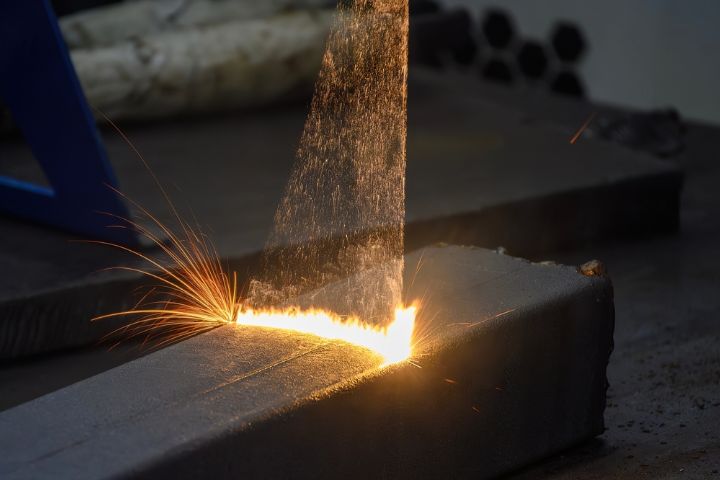
Yes, laser cleaning can remove corrosion from many types of industrial machinery. It uses controlled laser energy to remove rust and oxidation from the surface while limiting unnecessary contact with the base metal.
For factories, engineering companies and maintenance teams, the real attraction is precision. Instead of aggressively treating the entire component, selected areas can be cleaned where required.
How Does Laser Cleaning Remove Corrosion?
Rust forms when iron or steel reacts with oxygen and moisture. Over time, the oxide layer can become thicker, flaky and increasingly difficult to remove.
Laser cleaning works by directing controlled pulses of laser energy at this contaminated layer.
The corrosion absorbs the energy differently from the underlying metal. When suitable settings are used, the rust breaks down and separates from the surface.
The operator moves the laser across the affected area in a controlled pattern. Depending on the severity of the corrosion, several passes may be required.
Light surface oxidation may disappear quickly. Heavy corrosion or several years of build-up generally takes longer.
The purpose is not to grind the component down. It is to remove the unwanted corrosion and expose the condition of the metal beneath it.
Why Corrosion Is a Problem for Industrial Machinery
It is easy to ignore small areas of rust when equipment is still working.
That can be a costly mistake.
Corrosion may eventually cause:
- Weakening of metal components
- Flaking paint and protective coatings
- Difficulty inspecting welds and joints
- Seized bolts and fasteners
- Contamination around production equipment
- Poor adhesion when repainting
- Damage to tools, moulds and fixtures
- Increased maintenance requirements
- Reduced equipment lifespan
In some cases, corrosion develops underneath paint or coating before becoming obvious.
A small bubble in the paint may reveal a much larger rusted area once the coating is removed.
Cleaning the corrosion allows maintenance teams to see what is actually happening to the component.
What Types of Industrial Machinery Can Be Laser Cleaned?
The suitability of laser cleaning depends on the material, condition and accessibility of the equipment, but there are many potential industrial applications.
Production Machinery
Factory machinery may develop rust around frames, guards, exposed steel sections, fasteners and components that are subjected to moisture or changing temperatures.
Laser cleaning can target affected areas without automatically requiring the entire machine to be stripped.
Manufacturing Equipment
Components used in manufacturing can collect oxidation, grease, carbon deposits and coatings.
Laser cleaning may be used during planned maintenance to restore selected areas or prepare components for further treatment.
Agricultural Machinery
Agricultural equipment is regularly exposed to moisture, dirt and changing weather conditions.
Frames, brackets, implements, steel components and machinery parts can develop significant corrosion over time.
Laser rust removal can be useful when parts are being restored rather than replaced.
Engineering Components
Engineering businesses often work with components where dimensions matter.
Heavy grinding may remove more metal than intended. Laser cleaning can provide a more controlled way to remove corrosion from suitable parts before measurement, repair or inspection.
Tools, Moulds and Fixtures
Industrial tooling can develop oxidation during storage or use.
Because moulds and precision tools can contain detailed edges and recesses, aggressive mechanical cleaning may not always be desirable.
Laser cleaning allows the operator to work around these features more carefully.
Can Laser Cleaning Remove Heavy Rust?
Yes, but there is an important distinction between removing rust and repairing corrosion damage.
Laser cleaning can remove thick corrosion from suitable metal surfaces, although heavier rust usually requires slower cleaning and additional passes.
Once that rust has been removed, the metal underneath may be pitted.
This is not damage caused by the laser. It is damage that the corrosion has already created.
Think of rust like decay on the surface of the metal. Cleaning can reveal healthy material underneath, but it cannot replace material that has already been eaten away.
Deep pitting, cracks or major material loss may require:
- Welding
- Filling
- Machining
- Component replacement
- Further structural assessment
Laser cleaning helps expose the real condition so the correct repair decision can be made.
Laser Cleaning vs Grinding Rust From Machinery
Grinding is one of the quickest ways to remove rust from accessible steel.
For simple, heavy components, it may be perfectly suitable.
The problem is that a grinder does not distinguish between corrosion and healthy metal. Once the rust has disappeared, the abrasive disc starts cutting into the substrate.
This may not matter on an agricultural frame or thick steel plate. On precision machinery or expensive components, it can.
Grinding can also be difficult around:
- Tight corners
- Curved surfaces
- Bolt heads
- Detailed components
- Welds
- Recesses
- Machinery that cannot be easily dismantled
Laser cleaning is a non-contact process. There is no abrasive wheel being pressed into the component.
That gives operators more control over the amount of material being removed.
Laser Cleaning vs Sandblasting for Machinery
Abrasive blasting is another well-established corrosion removal method.
It can be extremely effective, particularly when large sections of machinery or structural steel require complete preparation before painting.
However, blasting brings several practical considerations.
The machinery may need to be moved into a blasting area. Sensitive components must be protected. Abrasive material can enter openings, bearings, seals and nearby equipment if containment is poor.
Afterwards, the spent blasting media has to be cleaned up.
Laser cleaning does not require abrasive media.
This can make it attractive when only specific areas need treatment or where blasting material would create unnecessary disruption.
Still, laser cleaning does not replace blasting in every situation. A very large steel structure covered in heavy corrosion may be faster and more economical to blast.
The correct method depends on what is being cleaned and what needs to happen afterwards.
Can Machinery Be Cleaned Without Completely Dismantling It?
Sometimes, yes.
This can be one of the most useful advantages of laser cleaning.
Traditional cleaning may require a component to be removed so it can be placed in a blasting cabinet, chemical bath or workshop area.
Portable laser cleaning equipment can allow some machinery to be treated on site.
For example, corrosion may be removed from an accessible frame, bracket, weld or exposed section while the main equipment remains in position.
There are limits.
The operator still requires safe access to the surface. Nearby sensitive components may need protection, and suitable laser safety measures must be established.
However, reducing the amount of dismantling can shorten maintenance work considerably.
Corrosion Removal Before Machinery Repainting
Painting directly over active corrosion rarely produces a lasting result.
Even if the surface looks acceptable initially, remaining rust can continue underneath the coating. Eventually the new paint begins to bubble, crack or flake.
Proper preparation is therefore essential.
Laser cleaning can remove corrosion, loose coatings and contamination before repainting.
Because it is a dry process, there is no washing water that must evaporate before coating.
It also does not rely on chemical rust removers that may leave residue requiring further cleaning.
Once the surface is prepared, the correct primer and protective coating can be applied.
For businesses already planning machinery refurbishment, combining corrosion removal with proper surface preparation can make much more sense than repeatedly painting over deteriorating areas.
Can Laser Cleaning Remove Paint and Rust at the Same Time?
Machinery often contains both.
You may have flaking paint on the surface, corrosion underneath it and grease around nearby components.
Laser cleaning can be used to remove different types of contamination, including:
- Rust
- Oxidation
- Paint
- Certain coatings
- Oil residue
- Grease
- Carbon deposits
- Surface contamination
The cleaning settings may need to change as different layers are encountered.
For example, the power and scanning speed suitable for an old coating may not be exactly the same as those used on exposed corrosion.
This is why professional operation matters. Industrial machinery rarely presents a perfectly uniform surface.
Cleaning Machinery Before Inspection
Corrosion and old coatings can hide defects.
An inspector may need a clear metal surface to examine:
- Welds
- Cracks
- Joints
- Repairs
- Structural components
- Pressure equipment
- Fabricated sections
Removing only the coating around the inspection area can be difficult with broad cleaning methods.
Laser cleaning can allow a specific strip or section to be exposed without unnecessarily stripping the entire component.
After inspection, that section can be prepared for recoating if required.
This can be particularly useful during planned maintenance programmes.
Does Laser Cleaning Affect Machinery Dimensions?
This is an important consideration for precision equipment.
Aggressive grinding or repeated abrasive blasting can gradually remove base material.
On a large steel frame, the difference may be insignificant. On a precision component, mould or engineered surface, small changes can matter.
Laser cleaning can be controlled so that the contamination layer is targeted while unnecessary removal of the substrate is limited.
That makes the process useful for applications where preserving edges, shapes or tolerances is important.
The operator still needs to select appropriate settings. Laser cleaning is controlled, but it is not impossible to misuse.
What About Oil and Grease on Industrial Equipment?
Rust is rarely the only contamination found on machinery.
Oil, grease and production residue often sit on the same surface.
Depending on the contamination and equipment, laser cleaning can remove or reduce these deposits as part of the preparation process.
In some cases, heavy oil or thick grease may be easier to remove through preliminary degreasing before laser treatment.
The aim is to choose the most efficient combination rather than forcing one cleaning method to do everything.
Once surface contamination is removed, laser cleaning can then focus on corrosion, coatings or oxidation underneath.
Can Laser Cleaning Reduce Industrial Maintenance Downtime?
Potentially.
The actual time saving depends on the project, but laser cleaning can reduce some of the additional work associated with traditional cleaning.
There may be less need for:
- Complete machinery dismantling
- Blasting media cleanup
- Drying after wet cleaning
- Chemical neutralisation
- Extensive masking
- Transporting components elsewhere
This becomes particularly valuable when machinery is part of an active production environment.
Every additional hour that important equipment is unavailable can affect output.
A cleaning method that simplifies preparation and cleanup may therefore have benefits beyond the actual cleaning time.
Is Laser Cleaning Suitable for Factories?
Yes, laser cleaning can be used in factory and industrial environments when the working area can be properly controlled.
Typical uses include:
- Machinery maintenance
- Rust removal
- Mould cleaning
- Weld preparation
- Surface preparation
- Coating removal
- Component restoration
- Tool cleaning
- Localised paint removal
Laser equipment requires trained operators and appropriate safety procedures.
Suitable extraction may also be required to collect the material removed from the surface.
The fact that laser cleaning produces less secondary waste than abrasive blasting does not mean there is no waste at all. Rust, coating particles and contamination still need to be managed correctly.
Does Laser Cleaning Prevent Rust From Coming Back?
No.
Laser cleaning removes existing corrosion. It does not permanently protect bare steel from future oxidation.
Once steel has been cleaned, it may begin to oxidise again if it remains exposed to moisture and oxygen.
Depending on the component, the next step may involve:
- Primer
- Industrial paint
- Protective coating
- Oil
- Corrosion inhibitor
- Plating
- Another appropriate surface treatment
This is why corrosion removal and surface protection should usually be considered together.
A perfectly cleaned steel component can start rusting again if it is simply left untreated.
Is Laser Cleaning Cost Effective for Industrial Machinery?
It depends on the scale and complexity of the project.
Laser cleaning equipment is specialist technology, so comparing hourly rates alone can give a misleading picture.
A better comparison includes the total process.
For example:
How long will the machinery be out of service?
Does it have to be dismantled?
Will blasting media need to be contained and removed?
Is there a risk of abrasive material entering sensitive areas?
Will the equipment need drying?
How much labour is required afterwards?
Is the component valuable enough that surface damage would be expensive?
On certain jobs, conventional cleaning will still be more economical.
On others, the ability to clean precisely and reduce secondary work can make laser cleaning a sensible choice.
When Is Laser Cleaning Particularly Useful?
Laser corrosion removal tends to make the strongest case when the machinery is:
Valuable
Replacing the equipment or component would be expensive.
Detailed
The surface contains corners, recesses, welds or features that are awkward to grind.
Difficult to move
On-site cleaning may reduce dismantling and transport.
Sensitive to abrasive material
Blasting media around bearings, electronics or production equipment may be undesirable.
Being prepared for inspection
Only a controlled section needs to be exposed.
Being restored
The aim is to preserve as much original metal as possible.
Professional Industrial Laser Cleaning in Ireland
Industrial corrosion does not always mean machinery has reached the end of its useful life.
In many cases, removing rust and properly treating the exposed metal can form part of a wider maintenance or refurbishment programme.
BD Shades provides professional laser cleaning services in Ireland for industrial, commercial, construction and restoration projects.
The team can assess the machinery, corrosion level and required finish before deciding whether laser cleaning is an appropriate method.
Because BD Shades also has experience in surface preparation and industrial painting, the work can be considered as part of the complete surface treatment process rather than simply removing visible rust.
Frequently Asked Questions
Can laser cleaning completely remove rust from machinery?
Laser cleaning can remove light and heavy corrosion from many suitable metal surfaces. Heavy rust may require several passes, and existing pitting or metal loss will remain visible after cleaning.
Does laser rust removal damage machinery?
When the correct settings are used, laser cleaning can remove corrosion while limiting unnecessary effects on the underlying metal. The equipment must be properly configured for the material.
Can laser cleaning be used on machinery without dismantling it?
In some cases, yes. Portable equipment can allow accessible areas to be cleaned while machinery remains in position. Safe access and laser controls are still required.
Can laser cleaning remove corrosion from steel?
Yes. Steel is one of the common materials treated using laser cleaning, including machinery frames, tools, fabricated components and industrial equipment.
Can laser cleaning remove rust before painting?
Yes. Rust and loose contamination can be removed before applying a suitable primer or protective coating.
Will rust return after laser cleaning?
It can. Laser cleaning removes existing corrosion but does not permanently protect bare metal. A suitable protective treatment may be required afterwards.
Can laser cleaning remove paint from machinery too?
Yes. Laser cleaning can remove suitable paints and coatings as well as corrosion. The settings may need to be changed depending on the coating and substrate.
Is laser cleaning better than sandblasting for machinery?
It depends on the job. Laser cleaning offers precision and does not use abrasive media, while sandblasting can be faster for very large and robust surfaces. The condition, size and sensitivity of the machinery should determine the method.
Is laser cleaning suitable for old industrial equipment?
Often, yes. It can be particularly useful during restoration where original components need to be retained and cleaned without aggressive grinding.
Where does BD Shades provide industrial laser cleaning?
BD Shades provides laser cleaning services for suitable industrial and commercial projects across Ireland, including projects in Dublin and other areas nationwide.