
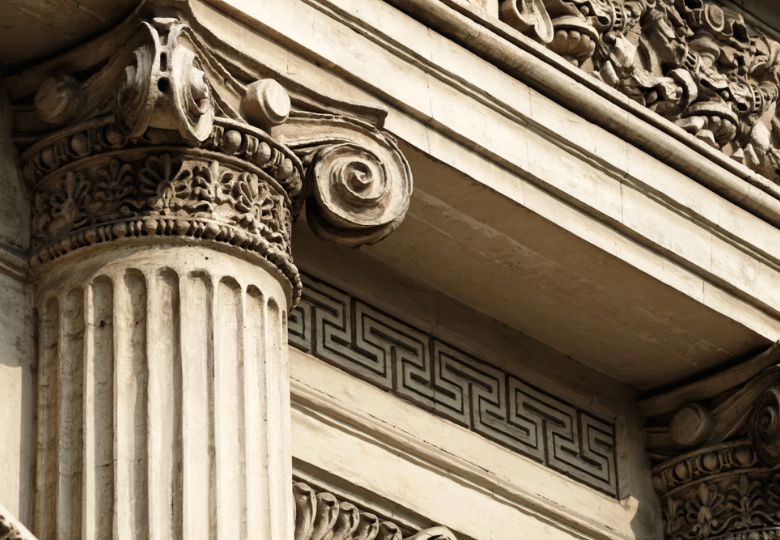
Cleaning an old building is very different from cleaning a new one.
A darkened stone entrance, weathered church feature or old piece of architectural metalwork may look as though it simply needs the dirt removed. Underneath that dirt, however, can be a surface that has survived for decades or even centuries.
The wrong cleaning method can remove more than grime.
Fine carving can lose definition. Soft stone can become rough. Brick faces can be damaged. Old metalwork can be scratched. Previous repairs, coatings and weak areas may also react differently from the original material.
This is one of the reasons laser cleaning has become an important tool in heritage building restoration.
Laser cleaning allows surface deposits to be removed in a highly controlled way without the constant physical abrasion associated with grinding, sanding or abrasive blasting. It can be particularly useful on detailed stonework, architectural features, monuments, historic metalwork and other surfaces where preserving the original material matters.
For the right project, it gives restoration teams something extremely valuable: control.
Why Cleaning Historic Buildings Requires a Different Approach
Older buildings rarely have perfectly uniform surfaces.
A stone facade may contain original masonry beside repairs carried out 30, 60 or 100 years later. One section may have been previously painted. Another may have been treated with chemicals. Mortar joints can be softer than the surrounding stone, while carved areas may be more fragile than flat sections.
Then there is the dirt itself.
Heritage buildings can collect:
- Atmospheric pollution
- Soot
- Carbon deposits
- Black surface crusts
- Old paint
- Failed coatings
- Rust staining
- Smoke residue
- General grime
- Previous treatment residues
Simply applying more pressure is not necessarily the answer.
A cleaning method can produce a dramatic before-and-after appearance while also removing part of the original surface. In conservation work, that is a poor trade.
The aim should usually be to remove unwanted material while retaining as much of the historic fabric as possible.
How Does Laser Cleaning Work on Heritage Surfaces?
Laser cleaning uses controlled pulses of laser energy directed at the surface.
Surface contamination absorbs that energy and can be broken down or removed through a process known as laser ablation. Because the process can be carefully controlled, operators can work gradually rather than aggressively stripping everything in one pass.
Laser cleaning has been used in cultural heritage conservation specifically because it can provide selective removal of deposits and encrustations from valuable and fragile surfaces. Researchers also note, however, that incorrect parameters can cause thermal or other surface effects, making proper adjustment and testing essential.
That distinction matters.
Laser cleaning should not be thought of as simply pointing a laser at an old wall.
The operator needs to consider:
- The material being cleaned
- The type of contamination
- Surface condition
- Previous treatments
- Colour and absorption characteristics
- The required level of cleaning
- Laser power
- Pulse characteristics
- Scanning speed
- How the surface responds during testing
On a restoration project, control is generally more important than raw cleaning speed.
Preserving Fine Architectural Details
One of the strongest applications for laser cleaning is detailed architectural work.
Think about an old carved stone entrance.
It may contain lettering, leaves, decorative borders, mouldings, small recesses and sharp edges. Aggressive abrasive cleaning can gradually soften those details.
Once an original carved edge has been worn away, cleaning cannot bring it back.
Because laser cleaning is essentially non-contact, there is no grinding wheel, abrasive pad or blasting material repeatedly striking the surface.
This can make it useful for features such as:
- Carved stone
- Decorative entrances
- Memorials
- Sculptures
- Bas-reliefs
- Architectural lettering
- Columns
- Stone surrounds
- Decorative facade features
- Historic monuments
Research into historic stone has found that laser cleaning can provide fine and selective removal of surface deposits. One long-term study examining stone cleaned many years earlier found encouraging conservation results compared with some mechanical and chemical cleaning methods, although the researchers described the findings as preliminary rather than a universal guarantee.
For a heritage project, that careful distinction is important.
Removing Soot and Dark Surface Deposits
Many old buildings become noticeably darker over time.
Urban pollution, smoke and airborne particles can settle on stone and masonry. These deposits often build up unevenly, particularly around ledges, recessed carvings and sheltered architectural details.
On some calcareous stones, pollution can also contribute to the formation of dark surface crusts.
Laser cleaning has been studied extensively for removing these types of deposits from historic stone and monuments.
The advantage is not simply that the surface becomes lighter.
The cleaning can be controlled area by area.
A heavily soiled recess may require a different approach from an exposed flat section beside it. The operator can adjust the treatment instead of applying the same force across everything.
This helps restoration teams aim for a balanced result rather than making an old building look unnaturally new.
Heritage Cleaning Is Not About Making Everything Look Brand New
This point is easy to overlook.
A successful restoration does not necessarily return a 150-year-old surface to the appearance it had on its first day.
Age itself can form part of the character of a historic building.
Natural colour variation, weathering and old surface patina can tell part of the building’s story.
Over-cleaning can make one section look noticeably different from neighbouring stone. Worse, it can remove historic surface material simply to achieve a brighter colour.
Laser cleaning allows work to proceed gradually.
The operator can stop once the required level of cleaning has been reached instead of continuing until every visible mark has disappeared.
For conservation work, knowing when to stop is often as important as knowing how to clean.
Can Laser Cleaning Be Used on Limestone and Marble?
Laser cleaning has a long history of research and practical use on stone, including limestone and marble.
Some of the early conservation applications involved important stone buildings and sculptures, and laser cleaning has since become an established technique within specialist cultural heritage conservation.
That does not mean every piece of limestone or marble can be treated identically.
Natural stone varies.
Two pieces that look similar can have different:
- Mineral composition
- Porosity
- Previous treatments
- Weathering
- Moisture content
- Surface strength
- Contamination
This is why test areas are so useful.
A small section can be cleaned first and examined before work continues across the wider facade.
What About Historic Brickwork?
Brick requires similar caution.
Older bricks can develop weathered or fragile outer faces. Mortar joints may be considerably softer than the brick itself.
Researchers have investigated laser cleaning on weathered brick and found potential for removing surface contamination, but they also noted that the interaction between the laser and the masonry surface must be understood.
In practical terms, this means the condition of the brick matters just as much as the dirt sitting on it.
Laser cleaning may be suitable for certain brick surfaces, architectural details and localised contamination, but assessment should come first.
Cleaning Historic Metalwork
Heritage buildings contain far more than stone.
Old properties can include:
- Iron gates
- Railings
- Balconies
- Metal plaques
- Window details
- Decorative brackets
- Architectural ironwork
- Historic machinery
- Metal doors
- Structural features
These surfaces may carry decades of paint, corrosion and previous repair work.
Traditional grinding can remove rust quickly, but it can also remove healthy metal and soften decorative details.
Abrasive blasting may be effective on robust surfaces, but it can be too aggressive where preserving fine features matters.
Laser cleaning allows corrosion and suitable coatings to be removed selectively from metalwork.
This can be particularly valuable where the original component is meant to be retained and restored rather than replaced.
After cleaning, the metal may still need repair, priming or another protective treatment. Laser cleaning removes the unwanted layer. It does not permanently prevent corrosion from returning.
Can Laser Cleaning Remove Old Paint From Heritage Features?
In suitable situations, yes.
Old buildings sometimes contain multiple generations of paint.
Decorative metalwork may have been repainted repeatedly. Stone features may carry inappropriate modern coatings. Historic components can have primer, paint, later repairs and corrosion underneath.
Laser cleaning can allow coatings to be removed gradually.
That ability to work layer by layer can be useful where the material beneath needs to be protected or examined.
However, old coatings can contain substances that require additional safety controls, and some historic finishes may themselves be significant.
This is another reason restoration work should begin with assessment rather than immediate removal.
Sometimes the correct conservation decision is to retain an old layer rather than clean it away.
Fire and Smoke Damage on Heritage Buildings
Fire creates a particularly difficult restoration problem.
Even when the structure survives, soot and smoke residue can spread over stone, brick, metal and decorative surfaces.
Heavy scrubbing can push contamination around rather than removing it cleanly. Wet cleaning may also be unsuitable for certain materials or locations.
Laser cleaning can provide another option for treating suitable fire-related surface deposits.
BD Shades lists removal of residues following fires among its laser cleaning applications, alongside restoration of stone, sculpture, architectural features and other sensitive surfaces.
The underlying material still needs careful examination.
Fire can change more than the appearance of a surface. Heat may weaken stone, damage mortar, affect coatings or distort metal.
Cleaning should therefore form part of a broader assessment rather than being treated as the entire restoration.
Laser Cleaning vs Abrasive Blasting for Heritage Work
Abrasive blasting removes material through physical impact.
For robust industrial steel, that can be exactly what is required.
Historic masonry is different.
Abrasive material striking an old surface can potentially affect:
- Carved detail
- Surface texture
- Weathered stone
- Brick faces
- Mortar joints
- Decorative metalwork
Laser cleaning does not use blasting media.
This removes one source of mechanical abrasion and also reduces the volume of secondary cleaning material introduced to the site.
However, saying laser cleaning is always “better” than abrasive cleaning would be too simplistic.
Every restoration project should be assessed according to its materials, condition and conservation objectives.
Laser Cleaning vs Chemical Cleaning
Chemical treatments are another established part of conservation.
Certain stains and deposits respond well to carefully selected chemical cleaning methods.
The difficulty is that chemical products can interact differently with porous materials, coatings and previous treatments.
Laser cleaning does not rely on applying a chemical stripping agent across the surface.
This can be valuable where chemical residue, penetration into porous material or surrounding sensitive areas are concerns.
Still, laser and chemical cleaning should not always be viewed as competitors.
Conservation research has specifically suggested that laser cleaning can sometimes be used alongside other cleaning methods rather than acting as a universal replacement for them.
The goal is the best outcome for the building, not loyalty to one particular technology.
Why Test Areas Matter So Much
For heritage restoration, a test area is one of the most sensible stages of the project.
It allows the team to see what is actually underneath the contamination.
A trial can help establish:
- How quickly deposits are removed
- How the original material responds
- The appropriate cleaning settings
- The colour beneath the dirt
- The condition of the surface
- Whether old repairs become visible
- Whether staining remains after cleaning
- How far the cleaning should go
It also gives the client, contractor and conservation team something real to examine.
That is far better than relying on assumptions based on photographs alone.
Can Laser Cleaning Damage a Historic Surface?
It can if it is used incorrectly.
This needs to be stated clearly.
Laser cleaning is highly controllable, but that does not mean the equipment is incapable of affecting the surface underneath.
Research into heritage conservation warns that inappropriate parameters can cause unwanted thermal effects or other substrate changes. The laser settings therefore need to be tailored to the material being treated.
Professional heritage cleaning involves understanding those limits.
A competent operator should be interested in protecting the original material, not simply cleaning as quickly as possible.
Where Can Laser Cleaning Help on a Heritage Project?
Potential applications include:
- Historic stone facades
- Churches
- Older public buildings
- Architectural entrances
- Monuments
- Memorials
- Sculptures
- Stone carvings
- Decorative brickwork
- Historic ironwork
- Railings and gates
- Metal plaques
- Smoke-damaged surfaces
- Old painted metalwork
- Selected coating removal
- Restoration before repainting
Some projects may use laser cleaning across a substantial area.
Others may only use it on particularly sensitive details while another cleaning method is used elsewhere.
Actually, that mixed approach can make a lot of sense.
The most appropriate method should follow the surface, rather than forcing the entire building into one cleaning system.
What Happens After Laser Cleaning?
Cleaning is often only one stage of heritage restoration.
Once deposits have been removed, other issues may become visible.
These can include:
- Cracked stone
- Open mortar joints
- Corroded metal
- Previous repairs
- Failed coatings
- Damaged decorative elements
- Pitting
- Water damage
- Colour differences
Those problems may then require specialist repair or conservation work.
Metalwork could require corrosion protection and repainting. Masonry might require repointing or local repairs. A facade may need further conservation treatment.
This is why the cleanest-looking surface is not necessarily the finished project.
The real objective is to preserve the building properly.
Heritage Laser Cleaning in Ireland
Ireland has a huge variety of historic structures, from churches and civic buildings to old houses, monuments, stone facades and industrial heritage.
Many of these surfaces have survived generations of weather, pollution, repainting, repairs and previous cleaning.
They deserve an approach that begins with understanding what is already there.
BD Shades provides laser cleaning services in Ireland for restoration, construction, commercial and industrial projects. Its listed restoration applications include sculptures, bas-reliefs, entrance portals, epitaphs and other sensitive features, while the company also works with brick, sandstone, stone, granite, marble and other surfaces.
For heritage projects, the surface can be assessed first so the cleaning method and settings can be matched to the material and the result required.
Frequently Asked Questions
Is laser cleaning safe for heritage buildings?
Laser cleaning can be suitable for historic surfaces when the material is properly assessed and the laser parameters are carefully controlled. A test area is often advisable because different stones, bricks, metals and previous treatments can react differently.
Can laser cleaning be used on old stone?
Yes, laser cleaning has been used extensively in stone conservation, including on limestone, marble, architectural features and monuments. The condition and composition of the stone should be assessed before wider cleaning begins.
Can laser cleaning remove black deposits from stone?
It can remove certain soot, pollution-related deposits and dark surface crusts from suitable stone. The exact result depends on the nature of the deposit and the condition of the surface underneath.
Can laser cleaning damage limestone?
Incorrect laser settings can affect a stone surface. This is why laser power, pulse characteristics and scanning technique must be matched to the particular limestone and contamination being treated.
Can laser cleaning remove paint from historic metalwork?
Yes, suitable paint and coatings can be removed from metal using laser cleaning. This can be useful for gates, railings and detailed architectural metalwork where retaining the original features is important.
Is laser cleaning better than sandblasting for old buildings?
Not automatically. Laser cleaning provides much greater control and avoids abrasive blasting media, making it useful for sensitive and detailed areas. Sandblasting may still have applications on more robust surfaces. The correct method depends on the material and conservation objective.
Does laser cleaning use chemicals?
The laser cleaning process itself does not require chemical stripping products. This can be useful where the use of chemicals on porous or sensitive heritage surfaces is undesirable.
Can laser cleaning remove fire and smoke damage?
Laser cleaning can help remove suitable soot and surface residue following fire or smoke damage. The underlying material should also be assessed because heat itself may have caused structural or surface deterioration.
Can laser cleaning be used on brick buildings?
It can be suitable for some historic brick surfaces. The brick and mortar should be assessed first, particularly where the outer brick face has become weathered or fragile.
Why is a test patch important before heritage laser cleaning?
A test patch shows how the contamination and original material respond to the treatment. It allows the settings and desired level of cleaning to be established before a larger or historically important area is treated.